

The following examples show how to use the 4-step risk management process to minimise pollution and waste risks in a changing climate. They cover a range of situations. These are examples only. The controls you put in place depend on:
- your specific business activities and their location
- the physical climate risks you need to manage.
Example one: New concrete batching plant
Ben is planning a new 5000 tonne/year concrete batching plant in Melbourne’s western suburbs. The plant will operate for 15 years.
Ben understands Victoria’s climate is changing. He understands he needs to consider how climate change may impact the risk of harm from his activities now and in the future.
Ben chooses a site not prone to bushfires, flooding or near the coast. The plant will be 100 metres away from nearby residents.
Steps to control the hazards and risks
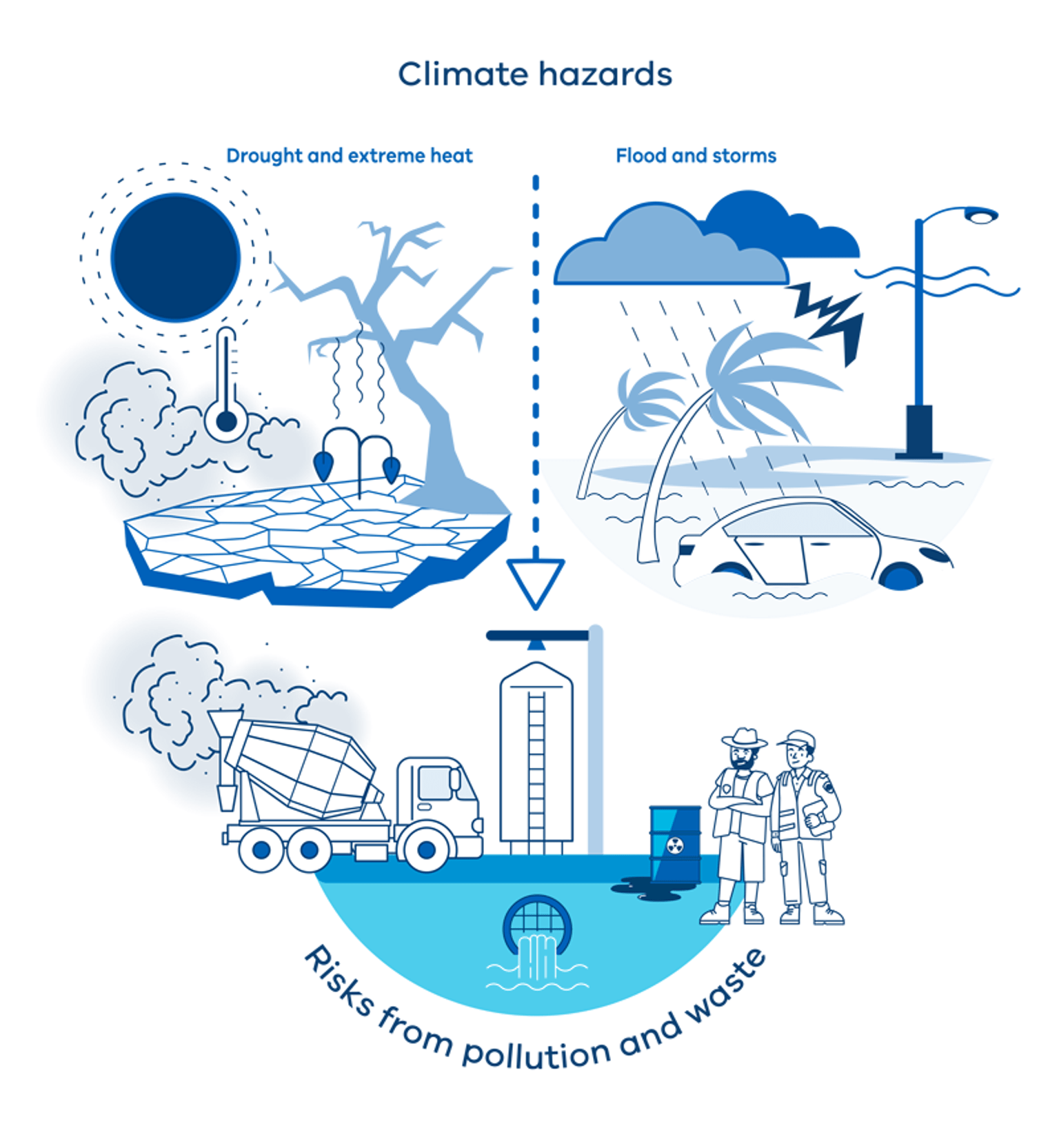
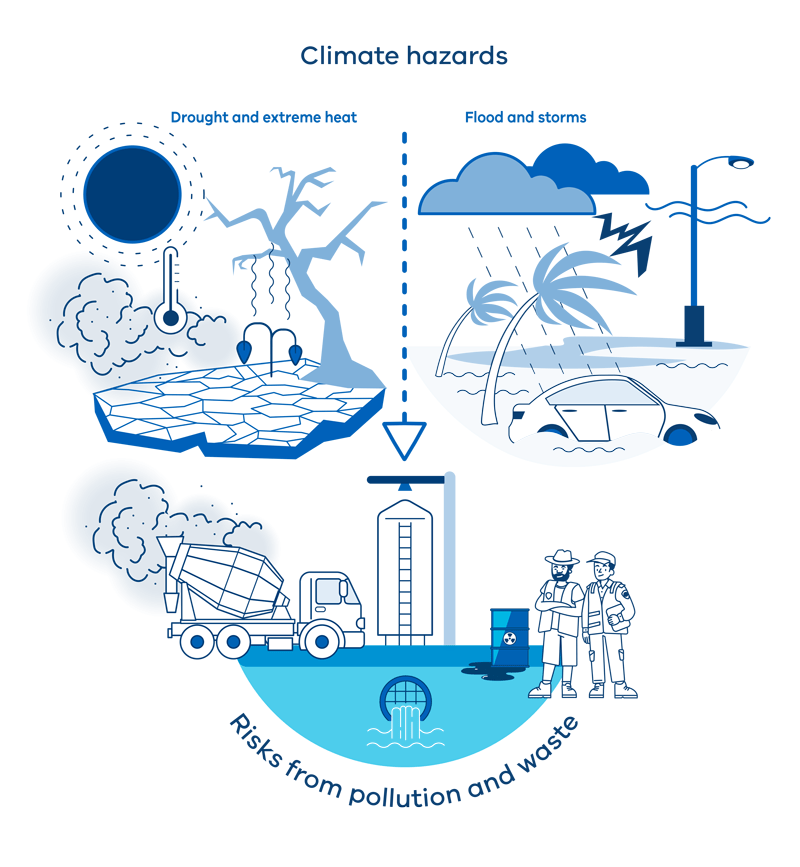
Graphic: Example of how climate hazards may cause risk of harm from a concrete batching plant.
Example 2: New chemical manufacturing plant
Mary is developing a chemical manufacturing plant in an outer south-eastern suburb of Melbourne. The design life of the plant is 30 years.
The site location meets the relevant separation distances and threshold limits in the Victorian Planning Provisions. The site is not located in a high-risk area for sea-level rise or bushfires.
Chemical works is a prescribed activity under the Environment Protection Regulations 2021. It requires a development licence from us before construction. Mary engages a consultant to assist in her development licence application. The consultant helps Mary to assess how climate change may impact the risk of harm.
Steps to control the hazards and risks
Example 3: Existing wastewater treatment plant
A regional Victorian water company provides wastewater services. It also operates several wastewater treatment plants. These are located near surface waters. The company must discharge to the environment in line with its EPA operating licences. Licence conditions relate to timing, volume and quality of discharges to surface waters. The company has RMMPs for each of their EPA licenced sites. The RMMPs document how risk of harm from pollution or waste is minimised under the GED. They include consideration of physical climate risks.
The water company recognises forward planning is critical. The water company understands:
- Victoria’s climate will continue to get warmer and drier
- more extreme weather events are expected
- the threats to wastewater storage and treatment infrastructure. These threats could increase the likelihood and consequences of surface water pollution.
The company expects wastewater volumes to increase in the future. They estimate wastewater connections in regional Victoria will increase to 3 times 2016 levels by 2065 (example only). They also recognise their sewage infrastructure will become increasingly vulnerable to climate hazards. The company understands they need to show they are minimising their physical climate risks. They need to consider this while planning for future increases in wastewater connections.
Steps to control the hazards and risks
Updated